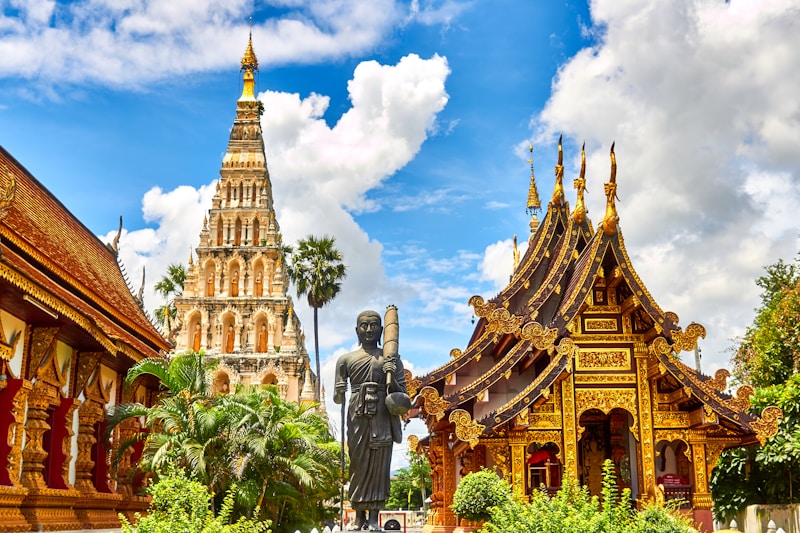
Songkran marks the Thai New Year (April 13-15) based on the Buddhist solar calendar. The name derives from Sanskrit "saṅkrānti" meaning "astrological passage." It's a time of renewal, when Thais return home to honor elders, visit temples, and cleanse Buddha images with perfumed water, symbolizing washing away bad luck.
Traditional Rituals
Songkran begins with morning alms-giving to monks and temple visits. Thais perform "Rod Nam Dum Hua" - younger people pour scented water over elders' hands as a respect gesture, receiving blessings in return. Families build sand pagodas at temples, symbolizing returning sand carried out on feet throughout the year.
The Epic Water Fights
What started as gentle water sprinkling evolved into massive street water battles! Armed with water guns, buckets, and hoses, millions engage in friendly warfare. Bangkok's Silom Road and Chiang Mai's moats become war zones. The water symbolizes purification and good fortune, though today it's mostly pure fun!
Regional Celebrations
Each region celebrates uniquely. Chiang Mai hosts week-long festivities with beauty pageants and parades. Pattaya throws massive beach parties. Ayutthaya combines water fun with cultural performances. Isan region features traditional folk music. Despite variations, the spirit of renewal, family, and joy remains universal across Thailand.